


Speakers: Dr Roland Chia, Dr Clement Chia, Mr Quek Tze-Ming and Bishop Emeritus Dr Robert M.Solomon
Venue: Saint Andrew’s Cathedral New Sanctuary
Time: 9.30am – 4.30pm
Speakers: Dr Roland Chia, Dr Clement Chia, Mr Quek Tze-Ming and Bishop Emeritus Dr Robert M.Solomon
Venue: Saint Andrew’s Cathedral New Sanctuary
Time: 9.30am – 4.30pm
A statement made by a former archbishop of the Church of England in July 2014 caused quite a stir among Christians, not only in his own denomination, but also among others. Retired archbishop George Carey commented on how his views about physician assisted suicide (PAS; or “assisted dying” as Carey called it) had changed. He wrote, “The fact is that I have changed my mind. The old philosophical certainties have collapsed in the face of the reality of needless suffering.”[1] That this statement came from Carey, considered an evangelical, was a surprise to many.
Carey’s arguments for his changed views had to do with the nature of God’s love and the reality of immense suffering (which he now considers to be meaningless suffering) of many terminally-ill patients. According to him, the loving God would not allow such meaningless suffering and would accept and endorse such patients choosing to end their suffering. Carey said that his previous arguments of the “slippery slope” (the argument that allowing PAS would open a can of other problems) and potential abuse by powers have become less convincing. Carey’s position was supported by the liberal archbishop Desmond Tutu. What Carey said brought some degree of confusion, so much so that the incumbent Church of England archbishop issued a statement to clarify the church’s unchanged position on the matter. [2]
The Situation Today
We now have increasing public discussions on dying, a topic that is usually not the subject of normal social conversations. But two things have changed that. Firstly, the rapid development of medical science and technology poses novel dilemmas for patients, and their families and physicians, when life can be prolonged, even in its terminal stages, through medical technology. Secondly, the erosion of long-held moral foundations and the rise of individualistic ideas of right and wrong have introduced intense debates on how society should proceed in this “brave new world.” There is an increasingly popular view that personal happiness is the summum bonum (highest good) of life, thus absolutising the freedom of choice and personal autonomy. It is, therefore, argued that each patient has the right to choose to die when suffering with terminal illness that is considered meaningless and unbearable. Theologians such as David Wells address this morally confusing ideas by showing that we live in an age when our understanding of ourselves as moral beings has been eclipsed by extreme forms of individualism and consumerism that have resulted in people becoming “moral illiterati” and “morally vacant”.[3]
The noble task of medicine is to find cures for illnesses that patients suffer. However, when one is diagnosed to suffer from an incurable and terminal illness, there are people who will find every means possible to find a cure or to prolong their life. Some desperately hold on to life, clutching at every straw offered. They travel and try whatever “cure” is available whether by doctors or charlatans until their deteriorating medical condition stops them. Commercialised medicine and the development of a wide range of untested alternative medicines do not help the situation. At the same time, doctors attempt to prolong the patient’s life using new tools and techniques. With increasing costs of medical treatment, this can be a grossly expensive but futile business.
It is for this reason that there are some people who are horrified by the thought of having their lives prolonged unnecessarily by extraordinary medical means – in a situation when death is imminent and unavoidable. Along with this, there are also others who, in the context of the pain and hopelessness of terminal illness, prefer to end their lives earlier through euthanasia. They consider it their individual right to make such a decision.
Some Definitions
Euthanasia is “the intentional killing by act or omission of a dependent human being for his or her alleged benefit.”[4] The word “intentional” is emphasised here. If death is not intended, it is not an act of euthanasia.[5]
Euthanasia can be voluntary (where the patient makes the decision) or involuntary (where others make the decision for the patient). It can also be active (for example, by giving lethal injections) or passive (for example, the withholding of food and water and customary care). When it is voluntary, it can be carried out directly by a physician (by, say, giving a lethal injection). Alternatively it can be achieved through PAS, when the doctor makes available to the patient the means by which he can take his own life. Voluntary euthanasia can also be carried out by acts of omission, as mentioned above. Such acts can also be involuntary, when the medical staff withhold food and medicines.[6] This would be considered as euthanasia as the intention is to speed up the death of the patent, that is, to kill the patient.
While euthanasia and PAS seek to shorten life, an Advance Medical Directive (AMD) seeks to prevent the unnecessary prolonging of life through extraordinary medical measures, which are heroic in their efforts but futile. Therein is the difference between euthanasia and AMD. In AMD, while heroic medicine is withheld to a dying patient, palliative care is not – which means that food and water are given, along with painkillers and other symptomatic medication to relieve the suffering of the patient. For these various reasons, from a Christian perspective, AMD is morally acceptable while euthanasia is not.
What does the Bible Say?
Our moral compass to deal with such a difficult and sensitive issue as the needs and rights of a dying patient must be found in the Bible, which has an authoritative place for faith and practice. What does the Bible say? What follows is a meditation on a Bible text that can help us to elucidate some important theological principles that can guide us in our thinking and actions. The text comes from a book in the Old Testament that deals with inexplicable and intense suffering (from our human perspective) in the life of a man called Job. The poor man does not have the advantage of listening to the dialogue that takes place between God and Satan. All he experiences is blow after blow in his life and the sudden and rapid deterioration in his personal circumstances. In many ways, his situation is akin to a patient who is suddenly struck with terminal illness, and whose world crashes in on him or her.
The key text is Job 2:3-10.
God Owns Us (Possession)
In this text, God has a wager with Satan. Initially, in an earlier wager (Job 1), God had allowed Satan to take away all of Job’s children (and therefore future), and possessions. But in spite of his devastating losses, Job was still faithful to God. He “did not sin by charging God with wrongdoing” (Job 1:22). God was pleased with Job’s unshakeable faith, and made it known to Satan, which leads to the second wager.
Satan said, “A man will give all he has for his own life. But stretch out your hand and strike his flesh and bones, and he will surely curse you to your face” (Job 2:4). He claimed that Job’s faith would change when his own body is struck and when he has to physically suffer. Confident of his servant Job’s steady faith, God gave permission to Satan to strike Job with illness and physical pain. But there was one condition. God limited what Satan could do to strike Job’s body with illness by telling him, “but you must spare his life” (Job 2:6). Why did God set this limit?
Satan is always slipping errors and falsehood in his speech. In this instance, he refers to Job’s “own life” (Job 2:4). But does Job’s life belong to him? The answer is No.
God created man and owns his life.
God created us in His image (Gen 1:27). He breathed His breath of life into the form of man he made from the dust, and man became a living being (Gen 2:7). When we die, our spirit returns to God (Ecc 12:7 – the dust returns to the ground it came from, and the spirit returns to God who gave it). The fact that God made us in His image and that we are “fearfully and wonderfully made” (Ps 139:14) means that we have a God-given dignity and our lives are precious.
Here in the book of Job, these truths that God is our Creator and the One who has given us life is reiterated. In Job 1:21, we read: “The Lord gave and the Lord has taken away.” God is the giver of life, and also the taker of life. He alone possesses that right and power. The book also acknowledges that “The Spirit of God has made me; the breath of the Almighty gives me life” (Job 33:4; this statement was made by Elihu, one of Job’s counsellors).
For the Christian, God’s ownership is a double ownership – He owns us as our Creator and as our Saviour. We are therefore to honour God with our whole lives, including our bodies, because we have been purchased and redeemed by Christ. Thus we read in 1 Cor 6:19-20, “Do you not know that your bodies are temples of the Holy Spirit, who is in you, whom you have received from God? You are not your own; you were bought at a price. Therefore honor God with your bodies.” We do not belong to ourselves, but to God. He alone has the right to give life and take it away.
This truth is further emphasised when we read Rom 14:7-8 NIV – “For none of us lives for ourselves alone, and none of us dies for ourselves alone. If we live, we live for the Lord; and if we die, we die for the Lord. So, whether we live or die, we belong to the Lord.” No one stands alone on his own, claiming absolute rights over his life and death. Because we are related to God (as Creator and Saviour), because we belong to Him, we do not have the right to take our own lives, or to take someone else’s life. Any discussion of personal autonomy must also deal with the important question of responsibility, especially relational responsibility. We are accountable to God because we are related to Him as His creation.
Our days are numbered by God.
Amid his inexplicable suffering, Job patiently and wisely spoke to God, “Man’s days are determined; you have decreed the number of his months and have set limits he cannot exceed” (Job 14:5). He acknowledged God’s authority over his life and God’s pre-determination of his life span, which means that God has also determined when and how his life would end. The psalmist declared the same truth when he told God, “My times are in your hands” (Ps 31:15).
This knowledge that God has already set our days is further expressed in Ps 139:16 – “All the days ordained for me were written in your book before one of them came to be”. In this great psalm, God’s intimate involvement in the creation of life is acknowledged. God is not a distant power who is not interested in all the details of our life. Rather, He is always present, from whose presence we cannot really escape. Such an intimate involvement in our lives on the part of God means that even our death is a matter of personal concern to Him. He had already determined how and when we will die, even before we were born. The time of our death is decided by God. It is He alone who has the authority to put to death and bring to life (Deut 32:39).
During His public ministry, Jesus often said, “My time has not yet come” (Jn 2:4; 7:1-9). But when it was time for Him to be sacrificed on the cross, He said that His time had come (Jn 12:23, 27; 17:1). The timings of our death are determined by God because it is He who numbers our days. It is for this reason that Job says: “The Lord gave and the Lord has taken away” when referring to birth and death (Job 1:21).
Job, therefore, refused to follow his wife’s rather heartless and insensitive advice: “Are you still holding on to your integrity? Curse God and die!” (Job 2:9). She was asking Job to commit suicide for he was in much pain and in a terrible condition. There is nothing said about she caring for her husband and seeking to alleviate his pain. She does not pray to God for help. Perhaps she became cynical when she saw how terribly Job suffered. So she considered that death would be better than for Job to suffer. But the man did not seem to die easily, in spite of his severe physical condition (we must remember that God had forbidden Satan to take Job’s life. Only God had that authority).
Job was told by his wife to curse God, and therefore to stop trusting God, for in her mind God was not going to do anything about Job’s suffering. She asked job to die. How would he do that? She was asking him to end his life (commit suicide)[7] and bring his suffering to an end. But Job considered her suggestion foolish. “Shall we accept good from God, and not trouble?” (Job 2:10). He saw God’s hand even behind his sufferings. He respected God’s sovereignty, and thus “did not sin in what he said” (Job 2:10).
The way God has created us, we are meant for relationships – with God and others. Even in death, these relationships remain important. Our relationship with God is paramount and our choices must recognise His sovereignty, presence, and grace.
God Forbids Murder (Prohibition)
Euthanasia, in whatever form, involves murder and suicide. It is not only taking into our hands the right that belongs to God, but it is also a contravention of God’s moral Law. The sixth commandment declares, “You shall not murder” (Ex 20:13). That the taking of another person’s life is morally wrong is clear. Bible scholars would also consider this commandment as prohibiting the taking of one’s life. It is for this reason that suicide was considered in the church as an act against divine Law.
Is suicide wrong?
There are seven cases of suicide in the Bible: a. Abimelech (Judg 9:54), b. Samson (Judg 16:29-31), c. Saul and his armour bearer (1Sam 31:3-6), d. Ahithophel (2Sam 17:23), e. Zimri (1Kgs 16:18); and f. Judas (Mt 27:5).
All of them (except Samson) are presented in negative light. These were ungodly men acting in desperation and disgrace. Samson’s case may have been seen differently as an act of martyrdom and self-sacrifice. Thus, though he is not a model of godly living, he makes it to the list of heroes of the faith in Heb 11:32. Suicide is thus quite consistently seen in Scripture as morally wrong.
For this reason, suicide has been considered by the church as sinful.[8] In some periods, suicide was in fact associated with “the unpardonable sin” leading to the idea that one who commits suicide is disqualified from heaven (because unlike a murderer, he would not have any opportunity to repent of his sinful action). However, over time, the church has come to see suicide not as the unpardonable sin, and more sensitivity and pastoral care has been extended to families of those who tragically commit suicide. But this in no way diminishes the Bible’s serious view of suicide, for such an act offends God by denying God the right over our lives and death, and it breaks God’s prohibition.
This is one key reason why Christians have made known their opposition to euthanasia and PAS. Moreover, the medical profession has also generally spoken against euthanasia and PAS because it goes against the doctor’s Hippocratic oath, promising that the physician will never do anything to deliberately bring harm to his patients.[9]
In God’s Hands, No Suffering is Meaningless (Providence and Purpose)
One of the arguments, and it is a powerful argument, used by those who seek to legitimise euthanasia and PAS, is the great suffering that some terminally ill patients suffer. This is all the more poignant when the suffering patient pleads to be put to death so that their misery can end. Hence, some argue that their request should be met through “mercy-killing”. It is called that because killing the patient is seen as a merciful act.
It is indeed extremely unsettling to see a patient suffer intense agony when in the throes of impending death. Should his death be speeded up so that his sufferings can end? Would this be a merciful act?[10] Our previous reflection on the truth that God created us and owns us, and has determined our days, and that He is present and concerned for us would help us to think more deeply about this problem. We also need to reflect on the reality of suffering, and how we should view it and handle it.
Suffering and Ultimate Meaning
There is no doubt that Job suffered greatly, more than we can imagine. He was desperate to find some meaning in his suffering. His friends tried to explain it but their explanations did not satisfy Job; they in fact became accusatory in nature and made his suffering worse. Sometimes suffering is inexplicable. We may be able to explain suffering in a broad general sense[11], but it is often difficult to explain an individual’s particular suffering.[12]
In Job’s case, God finally spoke above all the human voices. He did not give any specific answer or explanation for Job’s sufferings – which reflects how we often experience suffering and God’s relative silence in it. The book of Job, however, gives the reader a bird’s eye view of things. The reader is made aware by the narrator of the story of the heavenly scenes and can hear the dialogue and wager between God and Satan. There is a heavenly drama to which the sufferer, Job, is not privy to. While we can see the full picture, Job suffers in the darkness of inexplicable loss and agony. But at the end, God steps in and puts an end to Job’s misery, blessing him more with far more than what he had before his excruciating trial (Job 42:12).
We may not be able to explain why someone suffers in a particular way, but we also know that God allows suffering for purposes best known to Him at that time, but the wisdom of which will be made known in the future when it will be explained how that suffering was redemptive and how “in all things God works for the good of those who love him, who have been called according to his purpose” (Rom 8:28). This does not mean that we do nothing to relieve the sufferings of others. Christian love demands that we do all we can to alleviate human suffering. The parable of the Good Samaritan told by Jesus (Lk 10:25-37) shows the lack of concern on the part of the religious professionals who do nothing to help the dying man on the road. It is the Samaritan traveller who shows Christian love by helping the wounded man.
How can we apply this in the case of a terminally ill patient? If the person is suffering much, we must acknowledge it and empathise with him. Trying to explain why he is suffering in that particular way is often unhelpful, a lesson we can learn from the blundering efforts of Job’s friends. Neither do we have the right to put an end to the patient’s suffering by terminating his life. Neither the patient nor we have that right. But we can still do something to bring relieve to the person’s suffering by caring for him. There are various things through palliative care that the patient can be helped – from medical alleviation of the pain to providing human company and dignity to the person. While we may not be able to explain why the person is suffering in that way, we can still help to mediate God’s presence.
Suffering and God’s Presence
Jesus suffered greatly when He died on the cross. It was not only physical in nature (for he was brutally beaten and crucified) but also social and spiritual. His death was a public event; He was stripped and hung in humiliation, and felt abandoned by God. In the depths of His sufferings, He cried out to His Father in heaven, “My God, my God, why have you forsaken me?” (Mt 27:46). Was there any ultimate meaning in His suffering? Yes, because He suffered for us, to save us. In having suffered, He also offers us His wounded hands, His precious company, especially when we suffer.
The apostle Paul suffered much for the gospel – from painful beatings to near death experiences. In all of it, he was confident that his sufferings could be explained by an overarching principle. Though we may lose control in our suffering, God does not. He allows suffering for His own purposes, though we may not see it in a given moment of suffering. Paul therefore, could write, “we rejoice in our sufferings, because we know that suffering produces perseverance; perseverance, character; and character, hope” (Rom 5:3).
More than seeing ultimate purpose, Paul enjoyed Christ’s presence especially in times of suffering. Writing from the restrictive conditions of a Roman prison, he opened his heart to say, “I want to know Christ and the power of his resurrection and the fellowship of sharing in his sufferings, becoming like him in his death” (Phil 3:10). Paul enjoyed the sweetest fellowship with Jesus when he suffered.
God may not explain why we are suffering at a particular moment, but He offers us His comforting and strengthening presence. We can rest in the mystery of that presence, and trust that “our momentary troubles are achieving for us an eternal glory that far outweighs them all” (2Cor 4:17). We may not fully know what went on in Job’s heart and mind when he was suffering, but surely one reason for his faithful resilience was that though he could not find any plausible meaning for his suffering, he knew in his heart that God had not abandoned him, that God was present even in the pain.
For a dying patient, what we can do to help is to mediate God’s presence. We can encourage the patient to experience the comforting presence of God. This is often experienced when God’s community gathers around the suffering person.
Suffering and God’s Community
We cannot use suffering as a reason to kill someone (an idea that is present in the suggestion made by Job’s wife). But we can do something to relief someone’s suffering. As a community, we can ensure that no one suffers alone, and without comfort and help. The Christian community ought to gather around the dying person. There are also hospices, where dying patients can be cared for and helped to die as comfortably as possible and with dignity.[13] Modern medicine can also help sufferers find some relief from pain.
When King Saul was critically wounded in battle, he asked his armour bearer to kill him, but he refused. Saul was obviously in great pain, but he was more fearful of being abused by his enemies (1Sam 31:4). Saul then committed suicide. It was a miserable end for the king, who died alone. There was no community to help him.
We saw earlier how the good Samaritan helped the wounded man who was left to die on the road (Mt 22:37-40). The Samaritan brought the man to an inn to be cared for, and “took care of him” (Lk 10:34). It is a little detail that is often missed. We can imagine the Samaritan sitting by the bedside of the badly wounded man, consoling him and attending to his needs throughout the night. He had the heart of a care-giver. He could not do it alone, and therefore recruited the innkeeper to be part of the caring team. Because he had to attend to other matters, he told the innkeeper to “Look after him” (Lk 10:35). Thus a community of caregivers was formed for the poor traveller who was left half dead on the road.
The church is asked to “do likewise” (Lk 10:37). We are to love our neighbours as ourselves, as commanded by the Lord Jesus (Mt 22:37-40). Terminally ill persons must not be abandoned or disposed of through euthanasia, but be cared for in community. In such communities they will be able to discover love and dignity, care and concern.
How Do We Go Forward?
Euthanasia is wrong because it contravenes God’s law and challenges His sovereignty. It will produce societal decline and loss of human dignity.[14] We have no right to legitimise or practice it. There are two fallacies that it is based on.
Firstly, it has to do with the “cure or kill” ideology.
This ideology can be described so: Try to cure the patient using medicine, but if the patient cannot be cured, then it is acceptable to kill him (or let him take his life). If this way of thinking is allowed to take root, it will grow into other monstrosities, the signs of which are already emerging where euthanasia or PAS are now legalised.[15]
Society should instead cherish a “cure or care” mindset. That is to say, if we are unable to cure patients, then we must care for them compassionately. Even in terminal illness, patients can be cared for through palliative medicine. Most people become depressed in such situations because of their pain or loneliness. However through caring palliative medicine (which can help the patient in his pain), and loving care provided by caregivers, a person in such conditions can die with dignity and hope. When euthanasia becomes an easy way out, then it can become a convenient way of “disposing” terminally ill patients whom society and families may not have the compassion or time to care for. That would be disastrous for any society. American philosopher Daniel Callahan aptly observes, “Euthanasia … is an act that requires two people to make it possible, and a complicit society to make it acceptable.”[16] The kind of society that legalises euthanasia would be one that would threaten human dignity and create the loss of trust and mutual respect. Moreover, those who are elderly, seriously ill or disabled would eventually face the threat of coming under the shadow of euthanasia, as it is expanded in its application.[17]
The second ideology is that death is better than suffering.
The motive for this is: Avoid suffering at all costs. Such an ideology fails to understand the redemptive effects of suffering (cf. 2Cor 4:16-18). We should not put ourselves or others to death just because we are suffering. Moreover, in terminal illness, palliative medicine exists that can assist patients who are suffering.
In the strong grip of his personal illness and agony, Job utters words of hope against the depressing circumstances that he was in. He declared, “I know my Redeemer lives” (Job 19:25). This truth is further elaborated in the New Testament and in the testimonies of countless believers who had approached death and suffering with the unshakeable faith of the gospel of Jesus. The ultimate hope of escape from pain is not death but resurrection (Rev 21:4).
Conclusion
No one should be allowed to die alone or with pain that can be reduced through medicine and loving care. But we have no right to take their life. Neither should they take their own. We do not have that right because our lives belong to God.
The term “euthanasia” means “good death”. It leads us to ask the question, “What is a good death?” A good death is to die in God’s hands. When Jesus gave up His life, He prayed, “Father into your hands I commit my spirit” (Lk 23:46), a habit adopted by His followers (Acts 7:59). In the history of pastoral care, especially in the uncertain times of medieval days when plagues and sudden death were common, the primary aim of pastoral care was to help people to die well. It follows that knowing how to die well will help one to also live well. A good death comes from a life lived in seeking to know Christ and to become like Him in death (Phil 3:10).
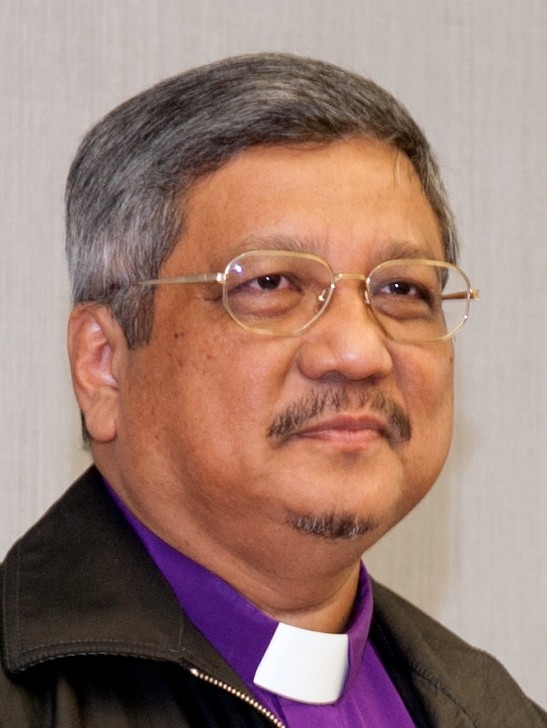
Bishop Emeritus Dr Robert M Solomon (PhD, Edinburgh) served as Bishop of The Methodist Church in Singapore from 2000-2012. He had served previously as a medical doctor, church pastor, principal of Trinity Theological College and president of the National Council of Churches of Singapore. Dr Solomon has degrees in medicine, theology, intercultural studies, and a PhD in pastoral theology from the University of Edinburgh. He has contributed many articles to books, theological dictionaries and journals and authored 20 books, including ‘The Race’, ‘The Conscience’, ‘The Enduring Word’, ‘The Virtuous Life’, ‘The Sermon of Jesus’ and ‘Apprenticed to Jesus’. He now has an active itinerant ministry of preaching and teaching in Singapore and abroad.
[1] “Lord Carey: I support assisted dying”, Telegraph, 12 July 2014, http://www.telegraph.co.uk/news/religion/10963195/Lord-Carey-I-support-assisted-dying.html.
[2] “Archbishop of Canterbury criticises George Carey’s support for ‘right to die’”, The Guardian, 15 July 2014, http://www.theguardian.com/society/2014/jul/15/archbishop-canterbury-george-carey-right-to-die.
[3] David F. Wells, Losing our Virtue: Why the Church must Recover its Moral Vision (Leicester, England: Inter-Varsity Press, 1998), 13.
[4] R. K. Sharma, Concise Textbook of Forensic Medicine and Toxicology, 2nd edn. (New Delhi: Elsevier, 2008), 162.
[5] See Roland Chia, The Right to Die? A Christian Response to Euthanasia (Singapore: Genesis, NCCS, 2009), 28-29 for a discussion on the principle of double effect, where a medical intervention (such as giving increasing dose of morphine to alleviate a patient’s pain) may result in his death. As the intention was not to kill the patient but to relieve his pain, his unfortunate death is morally acceptable. It is different from euthanasia where the aim is to speed up the death of the patient.
[6] Roland Chia has rightly maintained that “the removal of the feeding tube from a PVS [persistent vegetative state] patient is a form of passive nonvoluntary euthanasia. Roland Chia, The Right to Die?, 27.
[7] Views vary among scholars as to the character and faith, or lack of it, of Job’s wife. She may have lost faith in God and saw no hope for Job. The only recourse was for him to die. Perhaps she asked him to curse God as “an indirect way of committing suicide”. Francis I. Andersen, Job, The Tyndale Old Testament Commentaries (Leicester, England; Downer’s Grove, US: Inter-Varsity Press, 1984), 93.
[8] St Augustine of Hippo was influential in his views that suicide was “self-murder” and was morally as reprehensible, if not more than murder. See Augustine, The City of God, trans. Marcus Dods (New York: Modern Library, 1950), Bk 1:24, 25.
[9] The traditional Hippocratic Oath, originating in classical times, says: “I will neither give a deadly drug to anybody if asked for it, nor will I make a suggestion to this effect. Similarly, I will not give to a woman an abortive remedy. In purity and holiness will I guard my life and my art.” See Kevin V. Ergil, Ancient Healing: Unlocking the Mysteries of Health and Healing through the Ages (Lincolnwood, IL: Publications International, Ltd.: 1997), 76. The World Medical Association has consistently expressed its opposition to the legalization of euthanasia and PAS through repeated statements. Its most recent statement in 2015 reiterates its position: “Physician-assisted suicide, like euthanasia, is unethical and must be condemned by the medical profession. Where the assistance of the physician is intentionally and deliberately directed at enabling an individual to end his or her own life, the physician acts unethically. However the right to decline medical treatment is a basic right of the patient and the physician does not act unethically even if respecting such a wish results in the death of the patient.” See its website, http://www.wma.net/en/30publications/10policies/p13/.
[10] In his encyclical Evangelium Vitae, Pope John Paul II points out that what may be termed “mercy killing” may not really be merciful. “In reality, what might seem logical and humane, when looked at more closely is seen to be senseless and inhumane.” See John Paul II, The Gospel of Life (New York: Random House, 1995), para 64, 116.
[11] See John Breck, The Sacred Gift of Life: Orthodox Christianity and Bioethics (New York: St Vladimir’s Seminary Press, 2000), 216. Breck offers several spiritual benefits of suffering: it creates humility before God, dependence on Him, sanctifies us, and helps us to share in the mission of Christ.
[12] Stanley Haeurwas, Naming the Silences: God, Medicine, and Suffering (Grand Rapids: Eerdmans, 1990). Hauerwas, a Christian theologian and ethicist, asserts that trying to explain suffering, especially in the case of children suffering terminal illness, is a pursuit in vain. Though we may not agree with all his conclusions, his argument that modern medicine’s “noisy” technological interventions in the face of suffering and death is a denial of the mystery of suffering and a distortion of reality that leads people to look to modern medicine as a god who would provide answers or solutions, is surely a point well worth reflecting on.
[13] There are many Christian books that have come out of hospice ministries. Two examples are Sheila Cassidy (a doctor), Sharing the Darkness: The Spirituality of Caring (London: Darton, Longman and Todd, 1988) and Deborah Howard (a nurse), Sunsets: Reflections for Life’s Final Journey (Wheaton: Crossway Books, 2005).
[14] See Robert Solomon, “A Good Death?” ETHOS Institute, http://ethosinstitute.sg/a-good-death/.
[15] In Belgium, children “in great pain” can be legally euthanised since early 2014. See “Belgium’s parliament votes through child euthanasia”, BBC News, 13 Feb 2014, http://www.bbc.com/news/world-europe-26181615. Also a prisoner suffering from “mental anguish” was given permission by a national legal body to pursue physician assisted suicide in Sept 2014. His doctors eventually refused to provide such assistance, and he was referred to a psychiatric institution. See “Belgian rapist Van Den Bleeken refused ‘right to die’”, BBC News, 6 Jan 2015, http://www.bbc.com/news/world-europe-30699780.
[16] Daniel Callahan, “When Self-Determination Runs Amok”, in Bioethics: An anthology, 2nd edn., Helga Kuhse and Peter Singer, eds. (Malden, MA: Blackwell Publishing, 2006), 381–5.
[17] The Netherlands was the first country to legalise euthanasia and PAS. Studies and official reports show that doctors have contravened rules and procedures and euthanized thousands of patients without their consent. See John I. Fleming, Euthanasia, the Netherlands, and Slippery Slopes, Southern Cross Bioethics Institute, Adelaide, South Australia, Bioethics Research Notes Occasional Paper No.1, June 1992, http://www.bioethics.org.au/Resources/Online%20Articles/Other%20Articles/Euthanasia%20the%20netherlands%20and%20slippery%20slopes.pdf.
In the ‘Preface’ of his famous work, the Proslogion (English: Discourse on the Existence of God) published in 1078, the medieval theologian Anselm of Canterbury announces its main theme as ‘faith seeking understanding’ (Latin: fides quaerens intellectum). In doing so, Anselm was following the great fifth century theologian Augustine, whose approach is summed up thus: ‘I believe in order to understand’ (Latin: credo ut intelligam).
Many theologians (especially in the Latin tradition) agree that ‘faith seeking understanding’ is a good definition of theology.
The English word ‘theology’ is a combination of two Greek words: theos which means God, and logos which means speech or thought. Theology is therefore the Church’s speech about God that is faithful to his revelation in Jesus Christ (the incarnate Word), and the Bible (the written Word).
The Church receives God’s self-disclosure in Christ by faith, which itself is a gift made possible by divine grace. Faith may be broadly described as the Church’s trust in the God who has made himself known in Jesus Christ.
Faith, however, must not be seen as just a matter of holding certain propositions to be true. It is the commitment of the whole person to the reality of God.
Faith is a human response to God. As my teacher, the late Colin Gunton, puts it: faith is a ‘responsive movement of the heart, responsive to God’s awaking movement into the world in reconciliation’.
But, as Gunton is quick to add, faith is a human response that is always enabled by the Spirit of God: ‘This human response, like all authentic human action, is the gift of the Spirit who enables people to become what they will be by relating them to God the Father through Christ’.
The definition of faith as the Church’s trusting assent to God in his revelation should not lead to the mistake – so common today – of reducing faith to subjective religious experience. Faith therefore must not be seen as a leap in the dark or as blind trust. If faith is the means by which the Church appropriates the objective revelation of God, then it is inextricably bound to knowledge, the knowledge of the living God.
Put simply, faith has to do with knowledge and understanding.
And because faith has to do with the knowledge of God, the Church’s quest to understand what she by faith holds to be true is not at all inimical to the nature of her faith.
The church’s quest for a deeper understanding of the mysteries of God in his revelation begins and ends in faith. As Karl Barth has put it, faith is both the terminus a quo (English: ‘point of origin’) and terminus ad quem (English: ‘destination’) of the Church’s thinking about God.
In her quest to understand the truths about God that she has received by faith, the Church employs reason as a tool. Faith and reason are therefore not to be separated like oil and water, and theology is neither a flight from logic nor a denial of human rationality.
Anselm’s understanding of theology puts a check on the modern propensity to put asunder what God himself has joined. Faith and reason are not antithetical to each other. In the power of the Holy Spirit, the Spirit of Truth, faith and reason can work in harmony with each other in the Church’s quest for deeper insights into God’s revealed truths.
As Pope John Paul II has so brilliantly put it in his remarkable encyclical Fides et Ratio (English: ‘Faith and Reason’): ‘Faith and reason are like wings on which the spirit rises to the contemplation of truth’. ‘Faith asks that its object be understood with the help of reason’, asserts Pope John Paul II, but ‘at the summit of its searching, reason acknowledges that it cannot do without what faith presents’.
It must be remembered that the Proslogion, where Anselm’s definition of theology is found, is a written in a form of a prayer. This fact is pertinent because it disabuses us from thinking that theology is a purely intellectual activity.
Although theology in some respects demands great intellectual energy and scholarly rigour, it is in essence a spiritual activity. Bishop Kallistos Ware of the Greek Orthodox Church is therefore absolutely right in pointing out that in the strict sense of the word theology refers to the contemplation of God himself.
Theology can never be reduced to just an academic pursuit. Prayer and theology must therefore be wedded together.
As the fourth century Christian ascetic Evagrius of Pontus has famously put it, ‘The one who prays is a theologian; the one who is a theologian, prays’. And Hans Urs von Balthasar, the great Roman Catholic theologian of the last century insists that one can only do theology ‘on one’s knees’.
What is not immediately obvious in Anselm’s famous definition (although it is assumed by Anselm himself) is that theology is always a communal – or better still, an ecclesial – activity. ‘The Church receives the faith theology seeks to understand, forms individuals in it (including theologians), and hands it on to them’, observes Bruce Marshall.
Theology can never be private endeavour or an activity severed from the life of the Church. In his famous essay, The Humanity of God Karl Barth maintains that theology can be carried out only in the context and in the service of the Church:
… theology cannot be carried on in the private lighthouses of some sort of merely personal discoveries and opinions. It can be carried on only in the Church – it can be put to work in all its elements only in the context of the questioning and answering Christian community and in rigorous service of its commission to all men.
Despite his bleak past, ex-offender Johnson Tan found comfort and encouragement in God’s Word. He now volunteers his time with PFS to encourage others.
Johnson Tan seemed like any other man in his 40s. However, Johnson experienced a tainted fragment in his life, which he is not shy to share, as he feels it is a living testimony of God’s grace—going after the lost sheep until He finds it. (Lk 15:3) Today, Johnson is happily married and a proud father of two. He shares with us about how in his despair and helplessness, he remembered he still has a friend in Jesus. This is his story.
I came from a family of secret society members. I dropped out of school when I was 13 and I joined the secret society and rose up to quite a high rank. I took drugs and was soon arrested for drug trafficking. I was put into the Queenstown Remand Prison awaiting sentence. It did not take very long for my sentence to be passed. Five years and six strokes of the cane. My world collapsed! For the first time… I prayed to God for comfort and guidance. Christianity was not new to me. I used to be from the Boys’ Brigade when I was schooling. Hence, God’s Word was deeply hidden at the back of my head long ago, but I was too stubborn to accept Jesus into my heart until this point.
Whilst I was in prison, I requested to join the Prison Chapel Services. I looked forward to the chapel service every month. It was where I could meet God and learn His Word. After some consideration, I decided to renounce my membership with the secret society whilst I was in prison. Many inmates advised me not to do that, as it was taboo. But I did it. I know my path and that is to follow Jesus!
The turning point of my life came. It was the day of my release. I was uncertain about my future. At the prison gate, two paths were laid before me. On one side, were three gang members who could not wait to get me started on their vices again. On the other side, was Brother Winston Tang from the Grace Assembly of God. My choice was clear. I chose the latter. That night, I prayed and met up with the gang members and announced my renunciation from the gang to lead a Christian life.
Life was tough after leaving the prison. I thank God for sending good people into my life, and moulding me—day by day—into the man He wants me to be. Thanks to After-Care Ministry Staff like Peter Lim from the Prison Fellowship Singapore (PFS), my life is back on track. The After-Care service helped me reintegrate into society. Peter also introduced me to other believers, and they gave me support and encouragement—sharing and praying for one another. God has blessed me with a livelihood, a wonderful family and a roof over our heads. I would not have been who I am today if not for the grace of God, the PFS, and passionate volunteers such as Peter.
____________________________________________
Free on the Inside Bible
The Bible Society has been working very closely with PFS since 2012 to print 3,000 copies of the Free on the Inside large-print, English-language Bible, containing notes of encouragement to edify the inmates with the Word. In response to PFS’ request to have Bibles for readers of the Chinese-language, we are now printing 3,000 copies of the same Bible in Chinese Union Version. This is an example of how your kind giving has blessed the inmates with the Word, through PFS and the Bible Society’s Sower Publishing Centre (SPC). Support SPC’s work with your generous donations today. You may direct your donations to ‘SPC’ or visit bible.org.sg/donate for more information.
“We take every thought captive to obey Christ” (2 Corinthians 10:5) is what comes to my mind in writing about engagement of the mind. In 2 Corinthians 10, Paul writes about how we are not waging war according to the flesh but have divine power to destroy strongholds. A stronghold which needs to be conquered is that of the mind.
A rabbi lawyer asked Jesus the following question to test him: “Which is the greatest commandment in the Law?” The rabbis were engaged in an ongoing debate to determine which commandments were “light” and which were “weighty”. The law referred to the whole of the Old Testament. Jesus responded by quoting Deuteronomy 6 verse 5: “You shall love the Lord your God with all your heart and with all your soul and with all your mind”. Faithful Jews repeated this twice daily but seldom understand the totality of personal devotion to God as represented by this verse in the Old Testament. We need to love God with our mind as well as with the heart and soul.
“Heart”, “soul” and “mind” do not represent rigid compartments of human existence but rather refer to parts of the whole person. The mind is part of the whole person but today it tends to be increasingly detached from the rest of the person so that we need to capture it back in our obedience to Christ, in integrating it with the heart and soul and then offering the whole person to God through Jesus Christ with the power and fellowship of the Holy Spirit.
Jesus Christ himself was devoted to God totally, in heart, mind and soul. Born a baby, growing up as a Jewish boy, we find Jesus able from the age of thirty able to obey God the Father totally in the path he took which led him to the cross. His sacrifice of His whole person to God on the cross is what enables us to be whole persons through faith in who Jesus is and what Jesus did on earth and carries on doing now for us while seated at the right hand of God in resurrected glory.
Taking every thought captive means bringing the mind back to being part of the whole person. Today the mind today tends to have a life of its own, and I find this to be especially so in the academic activity that I am engaged in. Academic life is centred around fields of study which can be professional (like medicine, accountancy, engineering) or humanities and science-based (like history, geography, economics, physics and chemistry). Each of these acquires an autonomy or life of its own and very often those in one field of study knows very little of what goes on in another field. Specialisation goes to extremes so much so the saying is that one may know everything about nothing!
Is it possible to then to know everything about everything? Can we have wisdom?
Proverbs 8:22 states that “the Lord possessed me (wisdom) at the beginning of his work, the first of his acts of old. Ages ago, I(wisdom) was set up, at the first, before the beginning of the earth”. This is but a reference to the Spirit of God which we read in Genesis 1:2 as “hovering over the face of the waters”.
There was in addition a third person present when God the Father created the heavens and the earth. This was Jesus Christ. Jesus was born a baby but Jesus had the mind of God for Jesus was there when God created the world. As stated in Colossians 1:16 “for by him (Jesus Christ), all things were created, in heaven and on earth, visible and invisible…all things were created through him and for him.”
When we engage our minds with God, we need to do so through the mind of Jesus Christ, for it was through the mind of Jesus that all things were created. Good thinkers recognise that there needs to be prayer before any intellectual activity is started. The mind of a person needs to be not only engaged with the body and spirit of a person but also with the body and spirit of God, i.e. with Jesus, God-become man and also with the Holy Spirit, the go-between God, the God in whom Christians have fellowship with each other and also with God the Father and God the Son.
God is a tri-une Person, God the Father, God the Son and God the Holy Spirit and in the same way as there is constant and complete communion between all three persons of the God-head, there needs to be constant communion between the body, mind and spirit of a person in order for any one of us to be a full person. The continual temptation is to fragment ourselves as if body, mind and spirit are separate persons not in contact with each other.
I am reminded of the description of the academic as an “egg-head” as if the head is out of proportion with the body in which it is located and the spirit which energises it. Many of my colleagues in the university are like that. It is a rare person who can engage in holistic companionship within the walls of a campus. The devil tempted Adam and Eve to disobey God in fragmenting their obedience to God. The apostle John wrote of all that is in the world as coming from the desires of the flesh (body, my italics), the desires of the eyes (mind, my italics) and pride in possessions (spirit, my italics). John stated that “if anyone loves he world, the love of the Father is not in him.” (1 John 2:15).
As Christians we are not to love the mind inordinately or excessively. The division of our person in body, mind and spirit is there but not to be dwelt on literally for what matters is the whole person. In order that the whole person can be made whole, the mind has to be brought into fellowship with the body and spirit through being made captive to Christ.
By the same analogy, there are some who love the body excessively or love the spirit excessively too. For some, the mind needs to be developed further: for others, it has to be reduced in importance. For some, the spirit needs to be developed, for others, there has to be some reduction. What the “proportions” are varies from person to person and in each person, from one stage of one’s journey through life to another stage.
The temptation of Satan is makes ourselves the determinant of how the whole person is to grow. The commandment of God is to make God the determinant at all times. The body has a certain capacity to grow and we all know that this capacity is reached when one’s height or weight reaches a limit. However the mind and the spirit are not so easily limited. The mind can continue to grow long after my body stops growing. We need to make it captive to Christ. Even more capable of growth is the spirit which is evidenced in the growth of pride. For that there seems to be no limit as it was pride which made Adam and Eve disobey God. C.S. Lewis rightly pointed out that pride is the chief obstacle to our loving God fully.
Be that it may, my concern as a scholar and as a teacher is to urge my students and colleagues to make every thought captive to Christ. This is easier said than done, for there are many activities of the mind which have yet to see the lordship of Jesus Christ. Christians ought to engage themselves in seeing how the Christian mind can be applied to what they study. There is no such thing as Christian economics, but there is the economics which a Christian writes about. It is the Christian person that matters, not economics. The person who is a Christian can write about economic knowledge as overflowing from his or her witness and life as a Christian. There are as many varieties of economics as there are Christians who are economists. It is the person that matters, not the subject.
Yet many Christians put the subject first. This leads to the mind being reduced to an autonomy of its own which is not its true calling. As Christians we are urged to make the mind part of the whole person and in so doing to give the appropriate significance to it as it deserves, in the context of a person’s walk with God. Making every thought captive does not mean reducing thought but elevating it to its proper role. May God helps us to make every thought captive and in so doing, give it the freedom it ought and deserves to have.

Dr Lee Soo Ann is President of The Bible Society of Singapore. He is also Senior Fellow at the Department of Economics at the National University of Singapore, where he earned his PhD in economics.

Speaker: Bishop Emeritus Dr Robert Solomon
Venue: Saint Andrew’s Cathedral Prayer Hall A-B
Time: 8pm – 9.30pm
In his fascinating book, Triumph of the City the world-renown economist Edward Glaeser describes the significance of cities in the history of human civilisation with great eloquence and inimitable passion. ‘Cities’, he writes, ‘the dense agglomerations that dot the globe, have been the engines of innovation since Plato and Socrates bickered in an Athenian marketplace’.
Presently about 54 percent of the world’s population live in cities, which Glaeser memorably describes as humanity’s ‘greatest invention’. The United Nations predicts that by 2050, the proportion of people living in urban areas is expected to increase to 66 percent.
In recent years, a number of Christian theologians have been reflecting on the significance and meaning of the city, and constructing what may be described as a theology of the city. A notable contribution to these reflections is surely Timothy Gorringe’s A Theology of the Built Environment, published more than ten years ago.
The perceptive reader of the Bible, however, will notice that the city is not regarded very highly in its pages.
We do not have to venture too far into the Bible to find a city that symbolises the colossalism and rebelliousness of the human spirit. The building of the first skyscraper described in Genesis 11 was a clear expression of human defiance against God, making Babel the quintessential city of rebellion.
In just a few short chapters later, we arrive at two cities that together signify the epitome of human depravity. There can be no doubt that the great sin of Sodom and Gomorrah is sexual perversion, those degrading habits and practices that are detestable in the eyes of the holy God (Genesis 19; Jude 7).
In the final chapters of the Bible we find a city – personified as a woman – that embodies every kind of idolatry and abomination, and the persecutor of Christians. In describing this city, John does not mince his words: “And on her forehead was written a name of mystery: ‘Babylon the great, mother of prostitutes and of earth’s abominations’. And I saw the woman, drunk with the blood of saints, the blood of the martyrs of Jesus” (Revelation 17:5).
It is therefore not at all surprising that some Christian thinkers see the city as the very antithesis of the will of God for humankind.
The most forceful and eloquent among them is surely the French Christian philosopher Jacques Ellul, for whom the city signifies the rejection of Eden and the quintessential symbol of sin, the ‘world’ and the powers of hell.
To see the city in such a negative light, however, is to fail to appreciate the complexity of the Biblical portrayal. Most crucially, it is to fail to see the significance of the fact that although the Bible began with a garden, it ended with a city.
In the midst of the Bible’s negative use of the city as a symbol of human evil, we find the powerfully redemptive imagery of the cities of refuge in Joshua 20 that serve as safe havens for persons guilty of manslaughter. These cities, built on the basis of the divine imperative, serve as the striking symbol of justice and mercy.
In Israel’s great wisdom literature and in the testimony of her prophets, we find an even more remarkable imagery of the city as a place of security and prosperity. ‘Then they cried to the Lord in their trouble’, writes the Psalmist, ‘and he delivered them from their distress. He led them by a straight way till they reached a city to dwell in’ (Psalm 107:6-7).
The city is depicted as a home, a refuge from the dangers and terrors of the wilderness, where the human community could flourish. The meaning of the city therefore transcends the buildings and the shared spaces, important though they are. As Gorringe puts it, ‘It was early recognised that it was the community, and not the built environment, which makes a city’.
The existence of cities therefore tells us profound things about ourselves and about our species. ‘The enduring strength of cities’, writes Glaeser, ‘reflects the profoundly social nature of humanity. Our ability to connect with one another is the defining characteristic of our species’.
‘Cities’, argues Gorringe succinctly, ‘instantiate social relations of difference without exclusion’. The city manifests this more powerfully than the town or the village simply because of the density and diversity of its population.
The Christian theologian or thinker must therefore avoid two extremes when reflecting on the meaning and significance of the city.
The first extreme is to follow Ellul uncritically and regard the city as the evil invention of the fallen man. And the second is to idealise the city and to see it as the guarantor of human happiness and peace.
Cities are in reality a mixed blessing, caught in the tension that characterise our time, between the first advent of Christ and his return.
And in this ‘time between the times’, human cities enigmatically are at once the locus of sin and evil and the environment where everything that is associated with what it means to be human – relationships, community, art, science, technology, music, commerce – may flourish.
In the midst of tensions and contradictions, however, cities can also be the locus of the presence of God.
In Ezekiel 48, we have a powerful description of the restoration of the city. In looking for best way to characterise the restored city, Ezekiel writes: ‘And the name of the city from that time on shall be, The LORD is there’ (Ezekiel 48:35).
The city that upholds justice and mercy can be a place that welcomes and honours the holy God. It can be a faint but real reflection of that heavenly city, the New Jerusalem, where glory of the Lord is resplendent and where nothing unclean, detestable and false can be found (Revelation 21: 27).

Dr Roland Chia is Chew Hock Hin Professor of Christian Doctrine at Trinity Theological College and Theological and Research Advisor of the Ethos Institute for Public Christianity.
The Israel trip in April led by Rev Dr Peter Poon was a wonderful trip, full of insights and wonder. It is really true that the Bible comes alive after one visits Israel. In Jerusalem, our guide pointed out the distance and the path that Jesus took with the heavy cross and that’s when the love of God for us overwhelmed me. The sharing by the Bible Societies also impressed upon me to pray for Israel. This trip has inspired me to return to Israel, know the Bible better and spend time to read the Bible daily with my mother. My tour leader and spiritual director were fantastic. The tour group was wonderful and I was deeply blessed on this trip. Don’t hesitate to visit the Holy Land if you have not.
In an article entitled, ‘Social Justice in Singapore: Some Personal Reflections’, Tommy Koh argues that Singapore is both a social just and a socially unjust society.
For Koh, Singapore is a socially just society because of the following reasons: basic human needs are met; women are not discriminated against; the rule of law is implemented with equity; the absence of racial and religious discrimination; every Singaporean has the right to education; and society is run according to the principle of meritocracy.
But these merits notwithstanding, Singapore, according to Koh, is also a socially unjust society for the following reasons: the widening inequality in income and wealth; the absence of a poverty line, resulting in some earning below a living wage; the absence of a minimum wage and the presence of poverty, especially poor and needy children in our society and schools.
Philosophers, social theorists, economists and politicians have long tried to envision and actualise a socially just world by promoting human rights (however these are conceived) and by pushing for economic egalitarianism through progressive taxation and other strategies to promote distributive justice.
For Christians, the idea of social justice is firmly rooted in the Bible. According to the Bible, the God who created the world and human beings is just (Deuteronomy 32:4). In addition, God has created human beings in his image and likeness (Gen 1:27), each of whom is equally valued by him.
God therefore clearly and repeatedly commands his people to show concern for the poor and the needy, the fatherless, the widow and the sojourner (Deuteronomy 10:18; 24:17; 27:19). The teachings of the Church on social justice are profoundly inspired by and based upon the unequivocal witness of Scripture.
According to the Christian vision, social justice has to do with much more than the possibilities of a social market economy or certain strategies in social legislation, important though they are. In the Christian account, social justice is grounded in human solidarity, a concept that captures a complex of meanings.
At its most basic core, human solidarity has to do with the indisputable fact that people are interdependent, and not only in the sense that they evidently rely on one another for their biological and emotional needs. Every conceivable human achievement – language, art, culture, education, science – testify eloquently to this interdependence.
More significantly, in the Christian account, human solidarity is seen not only as a necessary fact, but also a positive value. This paradoxically means that while solidarity is a given, an indispensable fact of human life and society, it is also something that we must work towards and cherish.
Reflecting on the significance of solidarity, the Catholic moral theologian, Thomas Massaro, S.J., writes: ‘We cannot realise our full potential or appreciate the full meaning of our dignity unless we share our lives with others and cooperate in projects that hold promise of mutual benefit’.
The virtue of solidarity begins with an inner attitude that expresses itself in concrete acts that demonstrate one’s commitment to the wellbeing of others. In this way, the virtue of solidarity is an antidote to the egoism and the selfish individualism that motivate members of modern society to obsessively pursue their own narcissistic agendas and neglect their social responsibilities.
There can be no social justice without a deep sense of social responsibility.
It is only when the concept of human rights – which has become sacrosanct in modern society – is set within the context of solidarity and concern for the wellbeing of the larger community that it will not fall prey to a rampant individualism. The virtue of solidarity enables us to see that in many cases our obligations to our neighbour must take precedence over our rights.
The virtue of solidarity also disciplines the use of power. It prohibits the concentration of power in a single individual or a single group, thereby preventing its abuse.
In addition, some theologians argue that solidarity goes a long way in ensuring that the use of power is ‘rational’. As the Catholic moral theologian Bernard Häring has perceptively put it: “Solidarity, expressed by consensus on basic human rights and duties and common concern for social justice and fair processes, strengthens the rationality of the use of power.”
True solidarity ensures that power is exercised according to the principles of justice, law and order.
And finally, solidarity, with its emphasis on the concern for the wellbeing of all – including the poor, the sick and the vulnerable – will not only promote the common good, but will also ensure that the language of common good will not be used to justify a utilitarian or a ‘majoritarian’ ethics (where ‘common good’ reads ‘the good of the majority’).
Social justice is the responsibility of every member of society, not just that of the government. While policies like minimum wages will certainly go a long way in making society more just, they are not enough.
A society is truly just only when there is real solidarity among its members.